
After Rapino Fireworks, States Use Quieter Friday to Re-center Live Nation Trial on its Use of Leverage
Friday’s proceedings in the state-led antitrust trial against Live Nation and Ticketmaster were far quieter than CEO Michael Rapino’s headline-grabbing…
Friday’s proceedings in the state-led antitrust trial against Live Nation and Ticketmaster were far quieter than CEO Michael Rapino’s headline-grabbing testimony the day before. But the shorter session still served a strategic purpose for the plaintiff states: to pull the case back to one of its most straightforward themes—that Live Nation’s control over major amphitheaters gave it leverage over artists, venues, and rival promoters that shaped the market.
Rapino’s Thursday appearance was combative, with prosecutors pushing to show how Live Nation and Ticketmaster allegedly wield their combined scale to suppress competition. Rapino and his team countered by downplaying consumer outrage, defending revenue practices, and distancing the CEO from internal exchanges—including Slack messages he conceded were “disgusting.”
On Friday, the states pivoted back to a simpler, more grounded theory of monopoly power. Their witness, longtime Live Nation executive Colin Lewis, offered them a clean path to do so.
Lewis’ testimony brought the focus back to venue leverage
According to courtroom reporting from Inner City Press, Lewis—who worked on global tours and large amphitheaters—was confronted with documents showing him saying he did not want AEG in the Hollywood Bowl “under any circumstances.” Prosecutors also pressed him on messages from a Wiz Khalifa–Snoop Dogg tour in which he wrote there was “no reason to pay them more because they don’t have option to play other amps.”
These statements dovetail neatly with the states’ core claim: that Live Nation’s scale and network effects left artists and venues with fewer practical alternatives than the company publicly suggests.
Lewis’ testimony was narrow but effective. States used it to underline internal hostility toward AEG’s access to key venues and to highlight how Live Nation evaluated artist options when routing amphitheater tours.
Live Nation countered predictably on cross-examination. Lewis testified that artists ultimately decide where they play, that roughly 50 major amphitheaters are not owned by Live Nation, and that an artist could route a full tour without the company. He also said his “off limits” reference to the Hollywood Bowl applied only during Live Nation’s booking window, not as a full exclusion.
That distinction is telling. Live Nation wants jurors focused on the theoretical existence of alternatives. The states want them focused on how Live Nation behaved when those alternatives were limited, inconvenient, or economically weaker in practice.
Friday’s exhibits pushed that point forward.
Internal records tied ticketing and content leverage together
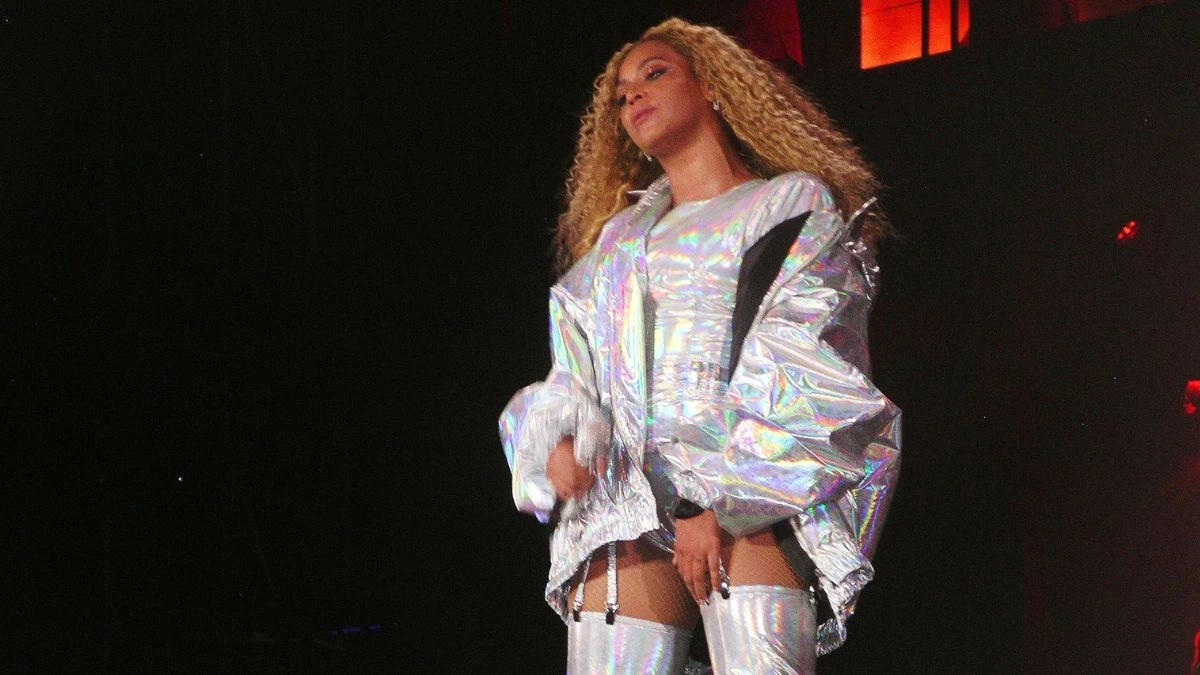
One of the clearest documents introduced Friday was a 2022 email from the University of Minnesota regarding a Beyoncé concert at Huntington Bank Stadium. The university preferred to use Paciolan as its ticketing platform, but Live Nation made clear that because of the event’s financial risk, it would not recommend the stadium if Paciolan were used. The university’s summary was blunt: “the event would not exist for the University if we didn’t use their preferred ticket company, Ticketmaster.”
Defense Exhibit PX1228

For the states, that’s the ideal exhibit—simple, concrete, and immediately understood by a jury. It collapses promotion, venue power, and ticketing leverage into one line: use Ticketmaster, or risk losing the show.
Other Friday exhibits (embedded at bottom of article) reinforced the same story.
A Barclays-related chain included the message that “on the content side, they need us a heck of a lot more than we need them,” with Madonna cited as context. Another line—“It’s always the ones that don’t understand our business that are the most dangerous”—echoes the states’ broader theory that Live Nation’s influence extends far beyond ticketing software.
A Cedar Park / H‑E‑B Center email chain continued that pattern. One Live Nation executive said the company had already “moved on” from providing content and that it would take months to reverse that stance; another urged the venue to “go silent on it for a few days.” A related exhibit then showed Ticketmaster executives celebrating that the venue had gotten “cold feet” about a rival and was “back in the family.”
Taken together, these documents made Lewis’ comments about amphitheater options look less like isolated statements and more like part of a consistent internal mindset. Content, venue alignment, and ticketing choice were treated as interconnected levers.
The contrast with Rapino’s testimony sharpened
That dynamic mattered even more because it followed Rapino’s high-profile Thursday appearance. Rapino attempted to reframe Live Nation as a professionalizing force in a fragmented industry, argued that ticketing is technically complex, and insisted that exclusivity choices rest with venues and teams. He pushed back hard on suggestions of improper leverage, describing disputed venue episodes as routine commercial disagreements.
Friday’s shorter session pulled the narrative back to the tangible: how Live Nation employees talked when they believed artists or venues lacked better alternatives.
It wasn’t flashy, but it was clearer.
Trial logistics: the case approaches the home stretch
Friday also offered some procedural markers.
Judge Arun Subramanian told jurors the trial was on or ahead of schedule. After the jury left, the parties argued over expert testimony, with the judge saying plaintiffs’ expert Dr. Hill could reference trial testimony but not the “velvet hammer” document directly. Live Nation expects to spend seven trial days on its defense case. The court also addressed Passover-related scheduling and noted that settlement discussions may still be simmering, though no breakthroughs were apparent.
The states had no further witnesses Friday and remain on pace to rest their case next week.
A quieter day, but not an easier one for Live Nation
If Thursday centered on Rapino, Friday reminded jurors what the states want the case to be about. Their strategy appears increasingly focused on concrete internal examples—how Live Nation behaved when it believed artists or venues had few viable options—rather than abstract market definitions.
Friday’s documents and Lewis’ testimony made that argument crisp: when Live Nation thought others had nowhere else to go, how did it use that advantage?
For the states, that may be the clearest question left for the jury.
Exhibits Referenced
1272-4 / PX1228
University of Minnesota correspondence stating that a Beyoncé event would not have happened at Huntington Bank Stadium unless the venue used Live Nation’s preferred ticketing company, Ticketmaster.
1272-14 / PX0335
Barclays-related internal chain discussing how Live Nation and Ticketmaster viewed the venue’s dependence on concert content and why the company believed Barclays needed it more than the reverse.
1272-11 / PX0408
Cedar Park / H-E-B Center emails in which Live Nation discussed having already “moved on” regarding content and suggested the venue should “go silent” for a period.
1272-9 / PX0444
Related H-E-B / Cedar Park chain in which Ticketmaster executives describe the venue as “back in the family” after getting cold feet about a rival provider.
Read next
More headlines

Jun 16, 2026
Daughtry Goes Unplugged for 20th Anniversary Acoustic U.S. Tour
Chris Daughtry is celebrating his 20-year anniversary since his breakthrough debut record with an acoustic tour. The U.S. run, dubbed…

Jun 16, 2026
Andrea Bocelli Brings Romanza Anniversary Tour to Yas Island During Abu Dhabi Grand Prix Week
Andrea Bocelli is bringing a dose of classical grandeur to Formula 1’s biggest week in Abu Dhabi. The world-renowned Italian…

Jun 16, 2026
Stagecoach Announces Dates for 2027 Festival
Stagecoach has announced the dates for its 2027 festival, with the country music event set to return to Indio, California,…